Death, while universal, is commemorated in remarkably different ways across cultures. The funeral traditions of South Asia and East Asia reflect distinct philosophical, religious, and social values that have evolved over millennia. Understanding these differences offers insight into how diverse communities honor their departed and find meaning in loss.
Religious Foundations
The most fundamental difference between South Asian and East Asian funeral practices lies in their religious underpinnings. South Asian funerals are predominantly influenced by Hinduism, Islam, Sikhism, and Buddhism, with Hinduism being the most prevalent. These traditions emphasize the soul’s journey toward liberation (moksha) or rebirth, viewing death as a transition rather than an ending.
East Asian funeral customs, conversely, are shaped primarily by Confucianism, Buddhism, Taoism, and Shintoism. While Buddhism appears in both regions, its practice differs significantly. East Asian traditions place greater emphasis on ancestor veneration and filial piety, viewing the deceased as continuing members of the family who require ongoing care and respect.
Cremation Versus Burial
In South Asian traditions, particularly Hindu and Sikh funerals, cremation is the overwhelmingly preferred method of disposition. Hindus believe cremation releases the soul from the physical body, allowing it to continue its spiritual journey. The eldest son typically lights the funeral pyre, and the cremation ideally occurs within 24 hours of death. The ashes are often immersed in sacred rivers, with the Ganges being the most revered site.
East Asian practices show more variation. While cremation has become increasingly common in countries like Japan due to space constraints, traditional Chinese funerals historically favored burial. The choice often depends on Buddhist influence versus Confucian traditions. In Japan, cremation rates exceed 99%, whereas in China, both cremation and burial coexist, with government policies sometimes influencing the choice. Korean traditions have shifted from burial toward cremation in recent decades, though elaborate burial rituals remain culturally significant.
The Timeline
South Asian funerals typically proceed with considerable urgency. Hindu and Muslim traditions mandate quick disposition of the body, often within 24 hours of death. This immediacy stems from both religious requirements and practical considerations in tropical climates. The mourning period following the funeral varies by religion: Hindus observe a 13-day mourning period, while Muslims traditionally mourn for three days, with widows observing an extended period called iddah.
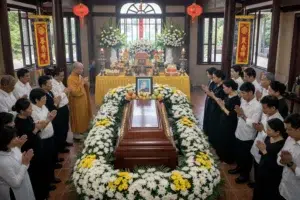
East Asian funeral timelines are notably different. Chinese funerals traditionally span several days, sometimes a week or more, allowing distant relatives to arrive and pay respects. The body may be kept at home or in a funeral parlor during this period. Japanese funerals, while more compressed than Chinese ones, still involve multiple ceremonies including a wake (otsuya) and funeral service (kokubetsushiki). The mourning period extends much longer, with specific memorial services held at designated intervals: the seventh day, 49th day, and annual anniversaries.
Color Symbolism
The symbolism of funeral attire reveals striking cultural contrasts. In South Asian traditions, white is the color of mourning. Hindu mourners dress in simple white clothes, avoiding bright colors and ornamentation. White represents purity, detachment, and the stripping away of worldly concerns. Widows traditionally wear white as a sign of their mourning status.
East Asian cultures traditionally associate white with death and mourning as well, particularly in Chinese and Korean funerals. However, the influence of Western customs has introduced black as an acceptable mourning color, especially in urban areas and among younger generations. Japanese funerals typically feature mourners in black formal wear, though white is used for the deceased’s clothing. This represents an interesting cultural evolution where traditional and modern practices coexist.
The Role of Fire and Ritual Offerings
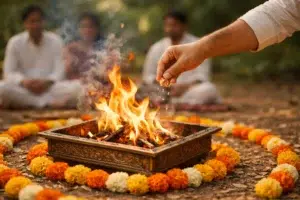
Fire plays a central role in South Asian funeral rites. Beyond cremation itself, fire is used in various purification rituals. Hindu last rites include the circling of the funeral pyre and offerings made into sacred fires. The concept of agni (fire) as a purifying element and messenger to the divine realm is deeply embedded in the tradition.
East Asian funerals incorporate fire differently, primarily through the burning of joss paper, incense, and symbolic offerings. Chinese traditions involve burning paper money, houses, cars, and other items believed to provide for the deceased in the afterlife. This practice reflects the belief that the deceased requires material comforts in the spiritual realm. Incense burning creates a sacred atmosphere and is believed to carry prayers to ancestors and deities.
Community Participation and Social Structure
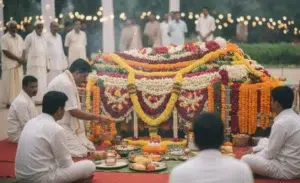
South Asian funerals emphasize community support but maintain certain hierarchical elements. In Hindu funerals, specific roles are designated by birth order and gender, with the eldest son performing crucial rituals. The community provides practical support through food preparation and assistance with arrangements, but the immediate family leads the ceremonies.
East Asian funerals reflect Confucian values of social hierarchy and propriety. Chinese funerals involve elaborate protocols regarding who bows to whom and in what order, based on family relationships and social status. The concept of “face” and proper conduct is paramount. Japanese funerals include monetary gifts (koden) from attendees, with strict protocols governing appropriate amounts based on one’s relationship to the deceased.
Honoring All Traditions with Compassionate Care
Whether you’re navigating the immediate needs of a Hindu cremation or planning an extended memorial following East Asian customs, Gooding Funeral Services understands that every tradition deserves respect and careful attention.
Our commitment extends beyond cultural competence to practical support when you need it most. With 24 hour assistance available any time, day or night, we’re here to guide you through this difficult journey. We believe in transparent, honest pricing with no hidden fees, allowing you to make decisions that honor your loved one while respecting your budget.
Every family receives our complete attention and compassionate service, because we understand that behind every funeral is a unique life worth celebrating. When you need support during life’s most challenging moments, Gooding Funeral Services is just a call away.
Read more from our guide on funeral services in the UK.
Pages You Might Like:
Funeral directors UK, Funeral services UK, Funeral Services in Leeds, Funeral directors Leeds, Funeral Directors in Bradford, Funeral Directors Bradford, Funeral Directors Manchester, Funeral Directors Huddersfield, Funeral Services in Doncaster, Asian Funeral Services, Hindu Funeral Services, Sikh Funeral Services, Caribbean Funeral Service