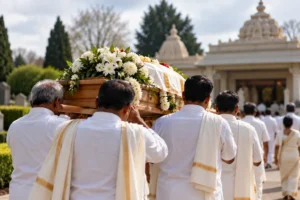
A traditional funeral remains a familiar and reassuring choice for many families across the UK. Rooted in long-standing customs, it offers structure at a time when clarity matters most. This guide explains what a traditional funeral involves, how it is usually arranged, and the decisions families are commonly asked to make along the way.
What Is A Traditional Funeral?
A traditional funeral typically follows a recognised sequence of events. It centres on respect for the deceased, time for reflection, and a shared space for mourners to gather. While details vary by faith, culture, and personal wishes, the format often includes:
- Care of the deceased before the service
- A funeral ceremony held in a church, crematorium, or cemetery chapel
- Burial or cremation following the service
- A gathering of family and friends afterwards, often referred to as a wake
This structure helps families navigate practical arrangements while honouring cultural or religious expectations.
Key Elements Of A Traditional Funeral
Care And Preparation Of The Deceased
After a death, the deceased is brought into the care of the funeral director. This includes preparation, dressing, and, if requested, viewing in a chapel of rest. Many families value this stage as it allows a private and dignified goodbye before the funeral day.
The Funeral Service
The service is the heart of a traditional funeral. It may be religious or non-religious and is usually led by a minister, celebrant, or faith leader. Music, readings, prayers, and personal tributes are often included. The tone can range from quiet reflection to a more celebratory remembrance of life.
Coffin And Transport
Traditional funerals usually involve a coffin chosen by the family, along with a hearse for transport to the service and final resting place. Limousines are sometimes arranged for close relatives, though this is optional.
Burial Or Cremation
Following the service, the deceased is laid to rest through burial or cremation. Burial involves interment in a cemetery or churchyard. Cremation is followed by the handling of ashes according to the family’s wishes, which may include scattering, burial, or keeping them in an urn.
Religious And Cultural Considerations
Traditional funerals often reflect specific faith or cultural customs. Christian funerals may include hymns and scripture readings, while Hindu, Sikh, Muslim, or Caribbean traditions follow distinct rites and timings. Understanding these practices is essential, as they influence everything from the order of events to how quickly arrangements need to be made.
A knowledgeable funeral director plays a central role in ensuring these traditions are followed correctly, without families needing to manage every detail themselves.
Why Families Still Choose Traditional Funerals
Despite evolving preferences, traditional funerals continue to appeal for clear reasons:
- They provide a recognised framework during an emotionally difficult period
- They allow extended family and community to come together in one place
- They respect cultural and faith-based expectations passed down through generations
For many, the familiarity of a traditional funeral offers comfort, grounding, and dignity.
Costs And Planning
Costs vary depending on choices such as the type of coffin, venue, transport, and burial or cremation fees. While traditional funerals are often seen as more expensive, careful planning allows families to prioritise what matters most and avoid unnecessary additions.
Discussing options openly with a funeral director helps maintain clarity and prevents unexpected expenses.
A Final Word On Choosing Support
Planning a traditional funeral is not about following rigid rules. It is about creating a respectful farewell that feels right for the person who has died and for those left behind.
At Gooding Funeral Services, we understand how important this balance is. As trusted funeral directors in UK, we guide families through every stage with patience, honesty, and cultural awareness. If you are planning a traditional funeral or simply want clear advice, our team is here to listen, explain your options, and support you with care when it matters most.
Read more from our guide.