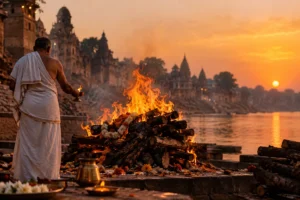
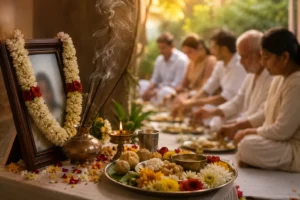
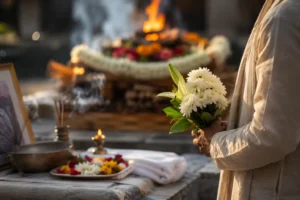
For generations, asthi visarjan meant one thing, a journey to the River Ganges, ashes carried by hand and immersed by a family member at a sacred ghat in India. For many Hindu families now settled in the UK, that journey is not always possible, whether due to cost, health, visa complications or simply the practical reality of life abroad. The good news is that Hindu tradition itself has always treated flowing water as sacred, not the Ganges alone, which has opened up several genuinely accepted ways to complete this ritual without leaving Britain. This guide, prepared with input from experienced funeral directors in UK, walks through every realistic option available to UK families today.
What Is Asthi Visarjan and Why It Matters
Asthi visarjan, from asthi meaning bone or remains and visarjan meaning immersion or release, is the ritual that completes the Hindu cremation process. After antyesti, the funeral rite itself, ashes are traditionally collected a few days later and immersed in flowing water, an act believed to help the soul complete its journey toward moksha, liberation from the cycle of rebirth.
Water carries deep symbolic weight in Hindu belief as a purifying and connecting element, dissolving the last physical trace of the body and, in a spiritual sense, carrying the soul onward. This is precisely why the ritual is considered incomplete without it, and why so many families feel a strong pull to see it done correctly, even when circumstances make a trip to India impractical.
Option One: Immersing Ashes in a UK River
The most common and widely accepted alternative for UK families is immersing ashes in a local flowing river. Hindu tradition has long recognised that any river which eventually flows to the sea carries the same essential purifying quality associated with the Ganges, and many Hindu priests in the UK now perform a short ceremony at a suitable riverside location as a matter of routine practice.
- The Thames, Mersey, Severn and Tyne have all been used by UK Hindu families for asthi visarjan over the years.
- A local pandit can perform a shortened but complete version of the immersion ritual, including mantras and prayers, at the chosen riverbank.
- Many temples across the UK maintain relationships with local priests specifically for this purpose and can help arrange the ceremony.
- Choosing a quieter, less crowded stretch of river often allows for a more private and unhurried ceremony.
Families considering this option should check current guidance before proceeding, since environmental rules still apply regardless of religious purpose. Under the Environment Agency’s guidance on scattering cremation ashes, ashes may generally be scattered or immersed in inland waters provided no urn, container or non-biodegradable material is left in the water, and it is worth checking for any local restrictions on the specific stretch of river you have in mind.
Option Two: Sending Ashes to India for Immersion Without Travelling
For families who feel strongly that only the Ganges itself will do, but who cannot make the journey personally, several specialist organisations now offer what is often called an in absentia service, performing the traditional immersion at Haridwar, Varanasi or another sacred site on the family’s behalf.
- Ashes are collected from the family or funeral director in the UK and transported to India by a specialist service rather than a standard courier.
- A pandit at the chosen holy site performs the full ceremony, including prayers, Pind Daan offerings and the immersion itself.
- Many providers record the ceremony and share photographs or video, along with the exact location, so the family has a lasting record of the ritual.
- Costs for this kind of service typically run into several hundred pounds once transport, documentation and the ceremony itself are included.
This option suits families for whom the specific sanctity of the Ganges matters more than being physically present, and it has become increasingly common as more UK based Hindu families settle permanently away from India across multiple generations.
Option Three: A UK-Based Ceremony With Symbolic Ganges Water
A third approach, growing steadily in popularity, blends the previous two options. Some UK temples and priests keep a small quantity of water brought from the Ganges specifically for this purpose, adding it to a local river or a designated body of water during the immersion ceremony. This is considered by many Hindu scholars and priests as a spiritually valid way to connect the local ritual directly to the sacred river itself, without requiring the ashes to travel at all.
Families interested in this option should ask their local temple or priest directly, since availability of genuine Ganges water varies and not every temple maintains a supply. Where it is available, this approach often offers a meaningful middle ground between full repatriation and a purely local ceremony.
What You Cannot Do: Postal and Courier Restrictions
However families choose to proceed, it is worth understanding the hard limits around transporting ashes, since these often surprise people who assume any courier will simply handle it.
- Royal Mail permits only a very small token amount, up to fifty grams, of ashes to be sent by standard post, whether within the UK or internationally.
- Major couriers including FedEx, DHL, UPS and DPD do not accept human ashes for transport under any circumstances, domestically or abroad.
- A full urn of ashes being sent to India or elsewhere must go through a specialist funeral shipping company, not a standard parcel service.
- Attempting to bypass these restrictions risks the ashes being seized, delayed or returned at customs, which is distressing for any family to face.
This is precisely why specialist Ganges immersion services exist and are worth using rather than attempting to arrange transport independently, since they already hold the correct accreditation and documentation processes to move ashes internationally and respectfully.
Documentation You Will Need
Regardless of which option a family chooses, certain paperwork is generally required, particularly if ashes are being sent abroad or transported any meaningful distance.
- A certified copy of the death certificate is almost always required for any international transport of ashes.
- The official cremation certificate, issued by the crematorium, confirms the legal circumstances of the cremation itself.
- A letter from the crematorium or funeral director confirming that the container holds only the cremated remains of the named individual is typically requested by customs.
- Some destination countries may also require an import permit or additional documentation from a local embassy or consulate.
A funeral director experienced in Hindu customs can usually prepare or advise on this documentation as part of arranging the cremation itself, which removes one more burden from a grieving family at an already difficult time.
Choosing the Right Option for Your Family
There is no single correct choice among these options, and Hindu priests and scholars broadly agree that sincerity of intention matters more than the specific location chosen. Families weighing their options often find it helpful to consider a few practical questions before deciding.
- Does the immediate family hold a strong personal or spiritual attachment specifically to the River Ganges rather than water in general.
- Is the cost of a specialist repatriation and immersion service manageable alongside the wider cost of the funeral itself.
- Would a local ceremony, held sooner and with family able to attend in person, bring more comfort than a distant ritual performed on the family’s behalf.
- Does a local temple maintain a supply of Ganges water that could offer a meaningful middle ground between the two approaches.
Speaking with a local pandit or an experienced funeral director before deciding often helps families reach a choice that feels right, rather than defaulting to whichever option seems most traditional on paper.
Get Guidance on Asthi Visarjan From Experienced Hands
Whichever path feels right for your family, completing asthi visarjan with care and correct guidance brings real comfort during a difficult time. Gooding Funeral Services offers experienced, culturally aware Hindu Funeral Services, helping families understand every option for ash immersion, whether locally in the UK or through a trusted specialist service to India. Contact our team today for honest, respectful guidance on completing this final step of your loved one’s journey.
Frequently Asked Questions
Can I immerse ashes in any UK river for asthi visarjan?
Most UK rivers that flow to the sea, including the Thames, Mersey, Severn and Tyne, have been used for asthi visarjan by Hindu families, though it is worth checking Environment Agency guidance and any local restrictions before proceeding.
Is it acceptable in Hindu tradition to use a local river instead of the Ganges?
Yes, Hindu belief holds that flowing rivers carry the same essential purifying quality, and many priests in the UK regularly perform full asthi visarjan ceremonies at local rivers rather than requiring travel to India.
Can I post ashes to India myself through Royal Mail?
No, Royal Mail only permits a token amount of up to fifty grams by standard post, and a full urn of ashes must be transported through a specialist funeral shipping company rather than standard postal or courier services.
How much does a specialist Ganges immersion service typically cost?
Costs vary by provider, but a full in absentia service covering collection, international transport, documentation and the ceremony itself typically runs into several hundred pounds once every stage is included.
What documents do I need to send ashes abroad?
You will generally need a certified copy of the death certificate, the official cremation certificate, and a letter from the crematorium confirming the container holds only the named individual’s ashes, alongside any destination country requirements.
Do UK temples ever keep real Ganges water for local ceremonies?
Some UK temples and priests do keep a small supply of water brought from the Ganges specifically to add to a local river during an immersion ceremony, though availability varies, so it is worth asking your local temple directly.