Collecting a loved one’s ashes is often one of the quietest and most emotional moments of the whole funeral process, and it is also one that catches families out. People assume that any close relative can simply walk in and take the urn, then discover that the funeral director asks for paperwork, identification or a name that was written on a form weeks earlier. These checks exist to protect the person who has died and the family. This guide explains who can legally collect ashes, what you need to bring, how to authorise someone else, and what happens when relatives disagree, drawing on the practical experience of funeral directors in UK who handle these requests every week.
The Short Answer
In England and Wales, a funeral director will release ashes to the person who signed the cremation application, known as the applicant, or to someone the applicant has authorised in writing. The applicant is usually the executor named in the will or a near relative, which means a close family member aged sixteen or over. Being next of kin does not automatically give you the right to collect the ashes. What matters is who completed the cremation paperwork, because the funeral director is bound to follow that person’s instructions.
Who Is the Applicant?
When a cremation is arranged, someone must complete the application form for cremation, often called Form Cremation 1. That person becomes the applicant, and they take responsibility for deciding what happens to the ashes afterwards. In most families the applicant is the executor of the will, or, where there is no will or no executor willing to act, a close relative who arranged the funeral.
- The executor named in the will is the usual first choice, because the deceased chose them to carry out their wishes.
- A near relative such as a spouse, partner, adult child, parent or sibling can act as applicant if there is no executor.
- Another person, including a close friend, can be the applicant where no relative is able or willing to take the role.
Legally, the applicant holds the ashes as a kind of trustee rather than as an owner. They are expected to dispose of them respectfully and in line with the deceased’s known wishes, rather than treating them as property to be divided.
Why Next of Kin Is Not Automatically Enough
Many families are surprised by this distinction. A brother, daughter or parent may be the closest living relative, yet if someone else signed the cremation form, the funeral director must deal with the signatory. This can feel hurtful, particularly when a relative who is not the applicant feels they have been shut out, but the rule protects everyone by giving the funeral director one clear person to answer to.
What You Need to Bring to Collect the Ashes
Funeral directors treat ashes with the same care as the person who has died, so expect a short and respectful identity check.
- Photo identification, such as a passport or driving licence, that matches the name on the cremation paperwork.
- Written authorisation from the applicant, if you are collecting on someone else’s behalf rather than as the applicant yourself.
- Any reference number or collection letter the funeral director has sent you, which helps staff find the correct record quickly.
You will normally be asked to sign for the ashes, so that there is a clear record of who took them and when.
How to Authorise Someone Else to Collect
The applicant does not have to collect the ashes personally. If illness, distance or emotion make the visit difficult, they can authorise a relative, friend or another trusted person to do it for them. A funeral director will always want this in writing, and a short signed note is usually enough as long as it is clear.
- The note should name the person being authorised and state that they may collect the ashes of the deceased by name.
- It should be signed and dated by the applicant, and include a contact number so the funeral director can verify it if needed.
- The person collecting should bring their own photo identification so the funeral director can match them to the note.
If the family live overseas or in a different part of the UK, many funeral directors can arrange for ashes to be delivered securely or passed to a specialist courier on written instruction. Royal Mail and major parcel companies have strict limits on carrying ashes, so it is worth asking the funeral director to arrange this rather than posting them yourself.
What If the Applicant Has Died or Cannot Act?
Sometimes the person who signed the form dies, loses capacity or becomes unreachable before the ashes are collected. In those cases, instructions can generally come from the applicant’s own executor or administrator, or from an attorney acting under a registered power of attorney. The funeral director or crematorium can usually tell you who needs to sign what, and a solicitor can help if the situation is complicated.
When Relatives Disagree About the Ashes
Disputes over ashes are more common than most people expect, particularly in blended families or where relatives live in different countries and hold different wishes. A funeral director cannot choose between relatives, and will follow the applicant’s instructions unless a court orders otherwise.
- If you have concerns, write to the funeral director before the ashes are collected, explaining that you wish to be consulted.
- Try to reach an agreement as a family, for example by dividing the ashes into several urns or agreeing a shared ceremony.
- Seek advice from a solicitor if the disagreement cannot be resolved, because the funeral director has no authority to settle it.
When Will the Ashes Be Ready?
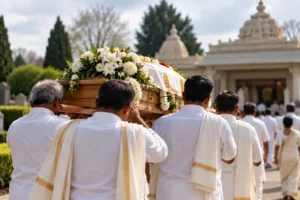
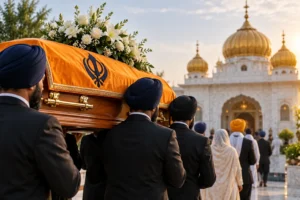
Ashes are usually available a few days after cremation, and most families can collect them within one to two weeks, depending on the crematorium and the funeral director. Some communities need them sooner. Hindu families often wish to collect ashes quickly so that asthi visarjan can follow the funeral, and Sikh families may arrange scattering in flowing water soon after the ceremony. If this applies to you, tell your funeral director at the first meeting so they can plan with the crematorium. Specialist Hindu Funeral Services and Sikh Funeral Directors understand these timings and can coordinate the collection around your family’s rituals.
Once you have the ashes, there is no UK law that stops you scattering them in most places, though you should follow Environment Agency guidance for rivers and the sea and ask the landowner’s permission on private land. Our guide on scattering ashes in UK rivers for Hindu and Sikh families explains the rules in more detail.
Keep the Paperwork Safe
Keep the cremation certificate, the authorisation note and any receipt for the ashes together in a safe place. You may need the certificate if you travel abroad with ashes, or if you later place them in a cemetery or memorial. For help with the legal steps around a death more broadly, the UK government guidance on what to do after someone dies sets out the process from registration through to arranging the funeral.
Support Through Every Step, Including the Last
Collecting ashes should feel respectful and unhurried, and the right preparation makes it so. Gooding Funeral Services helps families with every stage of a funeral, from the cremation paperwork to the safe return of ashes, and our culturally aware Hindu Funeral Services and Sikh Funeral Directors teams plan collections around your family’s traditions. Contact us today and we will guide you through it with care.
Frequently Asked Questions
- Who can collect ashes from a funeral director?
The applicant who signed the cremation application, or a person they have authorised in writing, can collect the ashes. The applicant is usually the executor or a near relative.
- Can any family member collect the ashes?
No. Being related is not enough. The funeral director will release ashes only to the applicant or someone the applicant has authorised, and they will ask for identification.
- What ID do I need to collect ashes?
You will normally need photo identification such as a passport or driving licence. If you are collecting for someone else, you will also need their written authorisation.
- Can I collect the ashes if I did not sign the cremation form?
Only if the person who signed the form gives written permission. Without it, the funeral director has to refuse, even if you are a close relative.
- How long can a funeral director hold ashes?
Practices vary, but funeral directors generally hold ashes safely for a period and will contact the applicant before taking any further step. Ask your funeral director about their policy so there are no surprises.
- What happens if the family cannot agree who gets the ashes?
The funeral director follows the applicant’s instructions and cannot arbitrate between relatives. If agreement is not possible, a solicitor can advise on the options, including court involvement as a last resort.