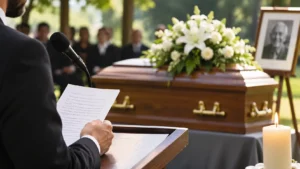
To choose the right funeral reading or poem, start with the person: pick words that sound like them, match their beliefs or lack of them, and suit the tone of the service. Aim for one to three readings of one to three minutes each, choose a reader who is comfortable speaking, and check with your funeral director or celebrant how much time you have. Popular UK choices include Do Not Stand at My Grave and Weep, Death Is Nothing at All, Remember by Christina Rossetti and Funeral Blues by W. H. Auden, while religious services often use Psalm 23 or passages from their own scriptures. A short piece you write yourself can be just as meaningful.
Your funeral director can suggest readings, print them in the order of service and arrange for the right person to read. Experienced funeral directors in UK hear these questions every week and are glad to help.
Why the Right Words Matter
Readings give a service its shape. Between the music, the eulogy and the prayers, they offer a quiet moment when everyone in the room can listen, reflect and feel something shared. A well chosen poem can say what people are struggling to say, while a poorly matched one can feel distant or even jarring. You do not need to find the perfect text, only one that feels honest to the person and to your family.
Five Questions to Ask Before You Choose
- Would they have liked it? Think of their humour, their favourite books, songs and sayings, and choose words that sound like them.
- Does it fit their beliefs? A religious passage suits someone of faith, while a secular poem may suit someone who was not religious.
- What is the tone? Decide whether the family wants comfort, celebration, honest sadness or a mixture of all three.
- How long is it? Most readings take one to three minutes, and a shorter piece is easier to read and to hear.
- Who will read it? Choose someone who is close to the person and comfortable speaking, and who has a backup if emotion takes over.
Popular Funeral Poems in the UK
A small group of poems appears on almost every UK list, and each has a distinct feel. We have not reproduced the poems here, because many are still in copyright, but you will find the full text in poetry anthologies and from your funeral director or celebrant.
| Reading | Author | Feel | Copyright note |
|---|---|---|---|
| Do Not Stand at My Grave and Weep | Often credited to Mary Elizabeth Frye | Comforting, outdoors imagery | Authorship is disputed, so check before printing |
| Death Is Nothing at All | Henry Scott Holland | Reassuring, conversational | Out of copyright |
| Remember | Christina Rossetti | Gentle, tender | Out of copyright |
| Funeral Blues | W. H. Auden | Raw, honest grief | In copyright, so permission may be needed |
| Crossing the Bar | Alfred, Lord Tennyson | Dignified, traditional | Out of copyright |
| If I Should Go | Joyce Grenfell | Light, affectionate | In copyright, so permission may be needed |
Do Not Stand at My Grave and Weep is the most requested, with imagery of a loved one present in the natural world. Death Is Nothing at All, which is technically a short prose passage, speaks in a calm and conversational voice. Remember offers gentle release from sadness, Funeral Blues makes room for raw grief, and Crossing the Bar suits those who prefer something dignified and traditional. A note of caution applies to Do Not Stand at My Grave and Weep, because its authorship is disputed and different versions circulate, so check the wording and credit before you print it.
Religious Readings
Faith traditions have their own readings, and your priest, minister, or Granthi will usually guide the choice.
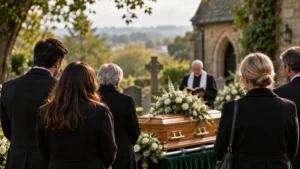
- Christian services most often use Psalm 23, passages from the Gospel of John and familiar hymns, chosen with the minister.
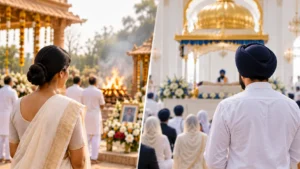
- Sikh funerals centre on hymns and prayers from the Guru Granth Sahib, including Kirtan Sohila, Sukhmani Sahib and Anand Sahib.
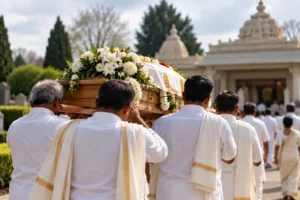
- Hindu funerals are led by a priest and often include verses from the Bhagavad Gita and other scriptures, chosen with the pandit.
- Other faiths follow their own customs, so speak to your faith leader before adding any reading from outside the tradition.
In Hindu and Sikh services, the readings are usually led by the priest or Granthi rather than chosen from a general anthology, so ask them first. Gooding’s Hindu Funeral Services and Sikh Funeral Directors teams, and the wider Asian community funeral services page, explain how readings, hymns and tributes fit into each tradition.
Non-Religious and Humanist Readings
Many popular funeral poems contain no religious content at all, which is why they are so widely used in non-religious services. Humanist and civil ceremonies often place poetry and personal tributes at the centre, and a celebrant can help you choose. You can also go beyond poetry, with a favourite passage from a novel, a song lyric spoken aloud, a letter, a recipe read with affection or a short piece of nature writing.
Short Readings and Light-Hearted Choices
If you are anxious about reading aloud, or time is tight, a shorter poem is a good choice. A few lines can be as powerful as a long piece, and you can also read a single verse from a longer work, such as the final stanza of Remember. Humour has a place too. A funny poem or a story about the person’s quirks can bring laughter and relief, and many families find that lightness is exactly what the person would have wanted. Keep the humour warm, and avoid anything that could embarrass or offend guests.
Readings for Different Relationships
- For a parent or grandparent, choose words about legacy, love and the way their care continues in the family.
- For a partner, choose something intimate and honest, which may be a love poem as much as a funeral one.
- For a friend or colleague, a warm or humorous reading that reflects shared experiences often works well.
- For a child, families often choose short, gentle pieces, and may invite siblings to take part in their own way.
Writing Your Own Words
You do not need to be a poet to write something meaningful. A few honest lines about what the person loved, what they taught you or what you will carry with you can be more moving than any published poem. Keep the language plain and the rhythm natural, read it aloud, and aim for a minute or two.
Here is a short original example, free to adapt for your own use: “Plant a tree where the morning light falls, and let the garden keep your name. We will sit a while where you sat, and call it by your laugh.”
Practical Tips for the Reader
- Practise aloud several times, ideally to one trusted person, and time yourself so the reading fits the service.
- Print the reading in a large font with wide spacing, and mark places to pause, because nerves can make words blur.
- Read more slowly than feels natural, and leave a moment of silence at the end before you sit down.
- Give a copy to a backup reader, such as a friend, relative or celebrant, in case emotion takes over.
- Tell your funeral director which readings you have chosen, so they can include them in the order of service.
Copyright and the Order of Service
Poems that are still in copyright may need permission from the author’s estate or publisher before they are printed in an order of service or recorded or livestreamed. Works by authors who died long ago, such as Rossetti and Tennyson, are generally free to use. The UK government’s guidance on copyright explains how it works, and your funeral director or celebrant can advise on your specific choice. For broader help with arranging the service, see the official guidance on what to do after someone dies.
Common Mistakes to Avoid
- Do not choose a reading only because it is popular, because the most personal choice is usually the most moving.
- Do not include too many readings, since a crowded service can feel rushed and hard to absorb.
- Do not leave the decision until the last minute, because readers need time to practise and prints need time to be checked.
- Do not assume everyone shares the same beliefs, and choose words that include guests of different faiths or none.
Help Finding the Words
Choosing readings is part of saying goodbye, and you do not have to do it alone. Gooding Funeral Services is a team of experienced funeral directors UK who can suggest readings, advise on timing, print your order of service and make sure your chosen words are heard with care. Contact us whenever you are ready, and we will help you find the right words for your loved one.
Frequently Asked Questions
- What is the most popular poem read at funerals in the UK?
Do Not Stand at My Grave and Weep is widely reported as the most requested funeral poem in the UK. Death Is Nothing at All by Henry Scott Holland and Remember by Christina Rossetti are also very common choices.
- How long should a funeral reading be?
Most funeral poems and readings take between 1 and 3 minutes to read aloud. Because funeral services are often timed, a shorter reading is usually easier for both the reader and the room.
- How many readings should a funeral have?
Most services include one to three readings alongside music, a eulogy and prayers. Ask your funeral director or celebrant how much time you have, since that sets the limit.
- Can you have a funeral without religious readings?
Yes. Many UK funerals use secular poems, personal tributes, favourite lyrics or passages from a book the person loved. Humanist and non-religious services often place poetry at the centre of the ceremony.
- Which readings are used in Hindu and Sikh funerals?
Sikh funerals centre on hymns and prayers from the Guru Granth Sahib, such as Kirtan Sohila, Sukhmani Sahib and Anand Sahib. Hindu funerals are led by a priest and often include verses from the Bhagavad Gita and other scriptures. Your priest or Granthi will advise.
- Can I read a poem I wrote myself?
Yes. A short original poem or a few personal words are often the most moving part of a service, and there are no copyright worries. Read it aloud beforehand and keep it to about a minute or two.
- Do I need permission to print a poem in the order of service?
Poems that are still in copyright may need permission from the author’s estate or publisher before you print or record them. Out of copyright works, such as those by Rossetti or Tennyson, can generally be used freely. Your funeral director or celebrant can advise.