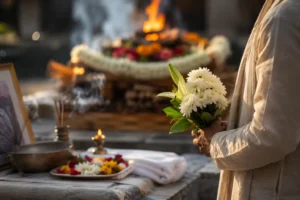
In Hinduism, the 13 days after death are a mourning period during which the family performs daily rites to help the soul (atma) move from a wandering state, called preta, to the realm of the ancestors, called pitri lok. Key rituals include cremation on day one, collecting the ashes, daily pind daan offerings, sapindikaran on day twelve, and the Terahvi feast on day thirteen, which ends the period of ritual impurity known as sutak.
This guide explains why the number thirteen matters, what happens on each day, the mourning rules families follow, how customs differ by region, and how British Hindu families adapt these rites around UK law and crematorium schedules.
Why Do Hindus Observe 13 Days After Death?
Hindu funeral rites are called Antyeshti, meaning “the last sacrifice”, and they form the final of the sixteen samskaras (life sacraments). Hindus believe the soul is eternal and only the physical body dies. After cremation, however, the soul does not move on instantly. According to the Garuda Purana, the scripture most closely linked to death rites, the departed soul lingers near family and home as a preta for a period of days.
During this time, the soul is believed to need help on its journey to the abode of Yama, the lord of death. The rice-ball offerings (pinda) made by the family each day are said to nourish the soul and gradually form a subtle body for travel. Once this transition is complete, the soul joins the ancestors and the family’s ritual impurity ends.
The 13-day period therefore serves two purposes at once:
- For the departed: daily prayers and offerings help the soul release earthly attachments and reach the ancestral realm peacefully.
- For the family: a structured mourning time gives grieving relatives space to cry, gather, remember and gently return to daily life.
- For the community: relatives, friends and neighbours visit, share meals and offer support, so no one grieves alone.
What Happens on Each of the 13 Days? A Day-by-Day Guide
Exact customs vary by family, region and priest, but most Hindu households follow this broad sequence. The person who leads the rites, usually the eldest son or closest male relative, is called the karta. Today many families also welcome daughters and wives into this role.
| Day | Ritual | What happens |
| Day 1 | Antim Sanskar (cremation) | The body is washed, dressed in white or new clothes, and cremated while mantras are chanted. The karta lights the fire or, in UK crematoria, presses the button. |
| Days 2 to 4 | Asthi Sanchayan | The ashes and bone fragments are collected for immersion in flowing water, ideally a holy river such as the Ganga. |
| Days 1 to 10 | Daily Pind Daan and lamp | Rice balls, sesame seeds and water are offered daily. A ghee lamp burns in the home and the Garuda Purana or Bhagavad Gita is read. |
| Day 10 | Dashgatra | The final pinda completes the soul’s subtle body. Male relatives often shave their heads as a sign of grief and purification. |
| Day 11 | Ekadashah Shraddha | Offerings and charity (daan), such as food, clothes or a cow donation, are made on the soul’s behalf. |
| Day 12 | Sapindikaran | The soul’s pinda is merged with three pindas for the father, grandfather and great-grandfather, uniting the departed with the ancestors. |
| Day 13 | Terahvi (Tehravin) | A purification havan, a feast for priests, relatives and the community, and gifts. Sutak ends and normal life resumes. |
Day 1: Cremation (Antim Sanskar)
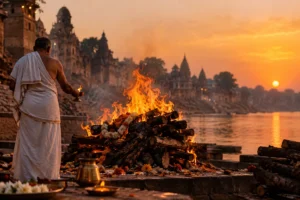
Hindus traditionally cremate as soon as possible, ideally within 24 hours. The body is bathed, anointed with sandalwood or turmeric, dressed and adorned with flowers, and a tulsi leaf or drops of Ganga water may be placed in the mouth. Mourners wear white, and the karta walks around the body while the priest recites prayers.
Days 2 to 10: Ashes, Pind Daan and Prayer
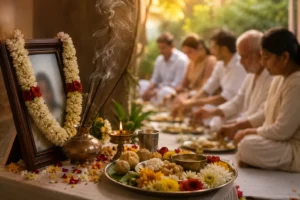
After cremation the family collects the ashes for immersion. Each day the karta offers pinda to the departed, and many homes keep a lamp burning continuously, facing south, the direction associated with Yama. Relatives gather in the evenings for bhajans, scripture readings and shared remembrance.
Day 12: Sapindikaran, the Turning Point
Scholars and priests regard sapindikaran as the most important rite of the period. By merging the departed’s pinda with those of three earlier generations, the family formally marks the soul’s passage from preta to pitri, an honoured ancestor who will be remembered in future shraddha ceremonies.
Day 13: Terahvi, the Closing Ceremony
The thirteenth day, called Terahvi closes the formal mourning period. The house is cleaned, a havan purifies the home, and the family feeds Brahmins, relatives and guests, often with a sweet dish for the first time since the death. Gifts and donations are given in the name of the departed, and the family can return to work, temple visits and daily routines.
What Rules Do Families Follow During the 13-Day Mourning Period?
The period of ritual impurity is called sutak or ashaucha. It applies most strictly to the immediate family and close blood relatives. These customs are not meant as punishment; they create a quiet, simple space for grief and prayer. Common observances include:
- Avoiding temple visits, home shrine worship (beyond prayers for the departed), weddings and festivals.
- Eating simple vegetarian (satvik) food, often without onion, garlic, sweets or fried dishes.
- In many homes, the family does not cook for the first few days, so neighbours and relatives bring meals instead.
- Wearing plain white or light-coloured clothes and avoiding new clothes, jewellery or make-up.
- Sleeping on the floor or on simple bedding as a sign of humility and detachment.
- Welcoming visitors who come to offer condolences, sit with the family and share memories.
Mourning does not fully end on day thirteen. Many families hold a monthly masik shraddha, mark the first death anniversary with a barsi or varshik shraddha, and honour the departed every year during Pitru Paksha, the fortnight dedicated to ancestors.
Do All Hindus Observe Exactly 13 Days?
Not always. Thirteen days is the most widely followed period, especially in North Indian, Gujarati and Marathi families, but the length and names of the rites change with region, community and family lineage. Your family priest (pandit) is the best guide to which practice applies to you.
- North India: the 13th day ceremony is called Terahvi or Tehravin, often with a large community meal.
- Gujarat: families commonly hold Baramu on the 12th day and Teramu on the 13th day.
- Maharashtra: the Dahava on the 10th day and Terava on the 13th day are the key milestones.
- Punjabi Hindu families: many hold a Chautha prayer meeting on the fourth day, followed by Kirya rites.
- South India: many Tamil, Telugu and Kannada families complete rites over 10 to 16 days, ending with a Subhasweekaram ceremony.
These differences reflect local scripture schools and family custom rather than any right or wrong approach, so it is worth confirming the plan with elders early.
How Do Hindu Families Observe the 13 Days in the UK?
In India, cremation usually happens within a day. In Britain, legal paperwork, coroner checks and crematorium availability can delay the funeral by a week or more. This is the biggest practical challenge for British Hindu families, because the cremation may fall well into the 13-day period. Most priests advise that the daily prayers and lamp begin from the day of death, while some families count the 13 days from the cremation instead. Agree on the approach with your pandit before booking dates.
Experienced funeral directors in UK can shorten delays by handling paperwork quickly and securing early crematorium slots. Key practical steps include:
- Register the death promptly: in England and Wales this is normally required within five days. See the official guidance on how to register a death.
- Use Tell Us Once: the government service notifies most departments at once. Read what to do after someone dies on GOV.UK.
- Choose a Hindu-friendly crematorium: many allow the family to witness the committal and let the karta start the cremation.
- Plan the ashes immersion: some families fly ashes to India, while others use designated UK river sites, following Environment Agency guidance to keep waterways clean.
- Arrange the pandit early: priests are in high demand, so book them for both the funeral and the 12th and 13th day rites.
A specialist provider of Hindu funeral services will also understand customs such as washing the body by family members, placing Ganga water and tulsi, and allowing time for prayers in the chapel of rest. Families with loved ones abroad can ask about repatriation and wider Asian funeral services to ensure rites continue seamlessly across countries.
Honouring Your Loved One with Care
The 13 days after death in Hindu rituals are a journey for both the soul and the family. From the sacred fire of cremation to the daily pind daan, the ancestral union of sapindikaran and the closing Terahvi feast, each step carries deep meaning. Observing these rites in the UK is entirely possible with the right planning, a trusted pandit and a funeral team that respects your faith.
At Gooding Funeral Services, our family-run team in Leeds supports Hindu families across Yorkshire and the UK, 24 hours a day. We coordinate pandits, Hindu-friendly crematoria, ashes repatriation and every ceremonial detail, so you can focus on prayer and remembrance. Call us on 0113 210 7998 or explore our Hindu funeral services to arrange a respectful farewell today.
Frequently Asked Questions
What is the 13th day after death called in Hinduism?
The 13th day ceremony is commonly called Terahvi or Tehravin in North India, Teramu in Gujarat and Terava in Maharashtra. It marks the end of the mourning period with a havan, a community meal and charitable gifts in the name of the departed.
Why is the 13th day after death important?
Hindus believe that by the 13th day the soul has completed its transition from a wandering preta to an honoured ancestor. The ceremony also purifies the home and family, ending sutak so relatives can resume normal life.
What should we not do during the 13 days after a death?
Families usually avoid temple visits, festivals, weddings, non-vegetarian food, alcohol, new clothes and celebrations. Many also avoid cooking at home in the first days and sleep on simple bedding as a mark of mourning.
What food is served on the 13th day?
The Terahvi meal is usually vegetarian and satvik, often including dal, rice, puri, seasonal vegetables and a sweet such as kheer or halwa. Foods the departed loved are sometimes included as a tribute.
Can women perform Hindu death rituals?
Traditionally, the eldest son leads the rites, but many priests and families now welcome daughters, wives and other relatives to act as karta, especially where no son is present.
What happens if the cremation in the UK is delayed?
Most families begin daily prayers and the lamp from the day of death and adjust the remaining rites with their pandit. Some count the 13 days from the cremation instead. An experienced funeral director can help secure an early crematorium slot.
Can Hindu ashes be scattered in UK rivers?
Yes. Scattering ashes in UK rivers is generally permitted without a licence, provided families follow Environment Agency guidance and place nothing non-biodegradable into the water. Some councils have designated sites for Hindu ash immersion.
What happens after the 13 days of mourning?
Remembrance continues with monthly shraddha ceremonies, the first death anniversary (barsi or varshik shraddha), and yearly offerings during Pitru Paksha to honour the family’s ancestors.