Once the Antam Sanskar, the Sikh funeral rite, has been completed and the ashes have been dealt with according to family wishes, the mourning is far from over. In the days that follow, the family gathers again for the Bhog ceremony, a ritual that many people outside the Sikh community, and even some younger members within it, do not fully understand. Families arranging a funeral through experienced Sikh Funeral Directors are often surprised at how central Bhog is to the entire mourning process, since it marks not the end of grief but a structured, communal step toward closure. This guide explains exactly what the Bhog ceremony is, when it happens, what takes place during it, and how families and guests in the UK can prepare for it with confidence.
What Is Antam Sanskar?
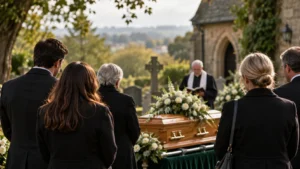
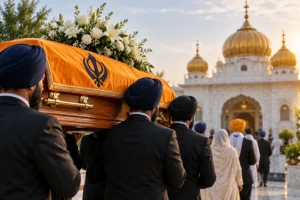
The Antam Sanskar is the Sikh funeral rite itself, covering the preparation of the body, the final prayers, and the cremation, which Sikh tradition strongly prefers over burial. The word Antam means final, and Sanskar refers to a sacrament or rite of passage, so together the term describes the last rite performed for the body. In the UK, this typically takes place at a crematorium, often with hymns, the Ardas prayer, and readings led by a Granthi, and it is usually arranged with the support of funeral directors in UK who understand Sikh customs and can coordinate closely with the family’s chosen Gurdwara.
Once the cremation itself concludes, Sikh mourning shifts into a longer and more reflective phase, and this is where the Bhog ceremony comes in.
What Is the Bhog Ceremony in Sikh Tradition?
Bhog is a word derived from Sanskrit meaning pleasure or completion, and in Sikh tradition it refers specifically to the ceremony that marks the conclusion of a full reading of the Guru Granth Sahib, the central scripture and living Guru of Sikhism. While Bhog ceremonies also take place at weddings, anniversaries and other significant occasions, the term is most commonly associated with funerals, where it signals the close of the structured mourning period that began with the Antam Sanskar.
At its core, the Bhog ceremony is not a separate ritual bolted onto the funeral, but the natural conclusion of a continuous or near continuous reading of scripture that the family arranges in the days following a death. This reading, and the ceremony that closes it, gives the family and community a defined structure for grief, with a clear beginning at the funeral and a clear closing point at Bhog.
When Is the Bhog Ceremony Held After a Death in the UK?
Timing can vary between families and regions, but most Sikh families in the UK hold the Bhog ceremony within ten days of the death, often aligning with the traditional period of mourning observed before normal routines resume. Some families choose to complete the scripture reading and hold Bhog on the same day as the cremation itself, particularly where practical constraints make an extended reading difficult, while others prefer to spread the reading across the full ten days for a more measured pace of remembrance.
- Many families arrange for the reading to conclude on the tenth day after death, which is when Bhog is traditionally observed.
- Some households choose a same day approach, completing a shorter reading and holding Bhog shortly after cremation.
- Gurdwara availability, family logistics and the availability of a Granthi often influence the final date chosen.
There is no single mandated timeline in Sikh scripture, so families should feel free to discuss the schedule with their Gurdwara and their chosen Sikh Funeral Directors, who can help coordinate dates around crematorium bookings, travel for relatives, and Gurdwara availability.
The Role of Akhand Path and Sehaj Path Before Bhog
Bhog cannot happen in isolation, since it marks the end of a specific reading of the Guru Granth Sahib, and Sikh families generally choose between two approaches to that reading.
- Akhand Path is a continuous, uninterrupted reading of the entire scripture, usually completed by a relay of readers within around forty eight hours.
- Sehaj Path is a more gradual reading, completed over a longer period, often days or weeks, at a pace the family finds manageable.
Families who want the Bhog to align with the traditional ten day mourning period will often choose Sehaj Path, spacing the reading out so it concludes naturally around that time. Families under greater time pressure, or those wanting the ceremony to conclude sooner, may opt for the more intensive Akhand Path instead. Either path is considered equally valid, and the choice usually comes down to family circumstance rather than religious obligation.
What Happens During the Bhog Ceremony: Step by Step
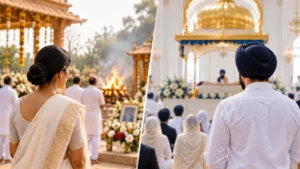
Regardless of which reading style the family has chosen, the Bhog ceremony itself follows a fairly consistent structure that guests can expect to see.
- The final portion of the Guru Granth Sahib is read aloud, beginning around the Slok Mahalla Nauvan section near the end of the scripture.
- This is typically followed by the reading of the Mundavani, a closing composition, and often the Raagmala listing of musical modes.
- The forty stanzas of Anand Sahib, a hymn of bliss, are recited by the congregation or a designated reader.
- A collective Ardas prayer follows, offering gratitude for the completed reading and seeking blessings and peace for the departed soul.
- A Hukamnama, a random verse taken from the scripture, is read aloud as spiritual guidance for those present.
- Karah Parshad, a sacred sweet offering, is distributed to everyone attending as the ceremony draws to a close.
The entire ceremony is conducted with quiet reverence rather than overt displays of grief, since Sikh teaching frames death as a natural transition and encourages acceptance of Waheguru’s will, known as Hukam, rather than prolonged mourning.
Karah Parshad, Ardas and Langar: Closing the Ceremony
Three elements consistently close out a Bhog ceremony, and each carries its own meaning within the wider event. Karah Parshad, a warm semolina based sweet made with equal parts flour, sugar and clarified butter, is prepared and blessed before being handed to every person present, symbolising equality regardless of background or status. The Ardas prayer that precedes it is a formal, structured supplication recited by the whole congregation, expressing thanks and requesting continued strength for the grieving family.
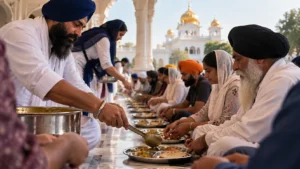
Following the formal prayers, most Bhog ceremonies conclude with Langar, the communal meal served to everyone in attendance without distinction. Langar reflects one of Sikhism’s core principles, that all people share a meal together as equals, and it also gives mourners a natural, informal setting to sit with the family, offer condolences, and share memories of the person who has died.
Etiquette for Guests Attending a Bhog Ceremony
Guests attending a Bhog ceremony, particularly those unfamiliar with Sikh customs, generally find the etiquette straightforward once they know what to expect.
- Dress modestly in plain, muted colours, and cover your head with a scarf or cloth before entering the prayer hall.
- Remove your shoes before entering the Gurdwara or the room where the Guru Granth Sahib is present.
- Sit on the floor if that is the custom at the venue, and follow the lead of those seated around you.
- Accept Karah Parshad with both hands as a mark of respect, even if you do not plan to eat all of it immediately.
- Stay for Langar if you are able to, since sharing the meal is considered a meaningful part of paying respects to the family.
The Ten Day Mourning Period and What Comes After
Sikh teaching does not mandate a fixed period of ritual mourning in the way some other traditions do, though many families in the UK still observe roughly ten days of reflection before resuming ordinary routines, with Bhog marking the natural close of that window. For a deeper look at how this period is typically structured and whether it is formally required, our related guide on the days following a Sikh funeral covers the topic in more detail.
After Bhog, families often continue quieter, private observances at home, and some choose to mark a larger memorial gathering around the anniversary of the death. There is no obligation to repeat the scale of the Bhog ceremony later, since its purpose is specifically to close the initial period of structured mourning rather than to open an ongoing cycle of ritual.
Practical Considerations for UK Sikh Families
Arranging a Bhog ceremony alongside a cremation and the practical demands of bereavement can feel overwhelming, so early coordination with your Gurdwara and funeral director makes a meaningful difference. Before any of this can proceed, the death must be formally registered, and the government’s official guidance on registering a death explains the documents and timelines involved, including the free Tell Us Once service that notifies multiple public bodies in one go. If you need time away from work to attend the ceremony or support the family, the Acas guidance on bereavement leave sets out what UK employees are generally entitled to, which is worth checking well ahead of the ten day period if Bhog falls on a working day.
Arranging a Sikh Funeral and Bhog Ceremony With Confidence
Understanding what happens after the Antam Sanskar helps families and guests approach the Bhog ceremony with the right preparation and respect during an already difficult time. If your family is arranging a Sikh funeral and would value experienced, culturally aware guidance through every stage, from Antam Sanskar to Bhog, Gooding Funeral Services provides compassionate Sikh Funeral Directors across the UK, coordinating closely with your Gurdwara and family at every step. Contact our team today to arrange a dignified, culturally respectful funeral for your loved one.
Frequently Asked Questions
- What does Bhog mean in Sikhism?
Bhog means pleasure or completion in Sanskrit, and in Sikh tradition it refers to the ceremony marking the conclusion of a full reading of the Guru Granth Sahib, most commonly associated with the close of the mourning period after a death.
- How many days after death is the Bhog ceremony held?
Most Sikh families in the UK hold the Bhog ceremony within ten days of the death, though some families complete a shorter reading and hold it on the same day as the cremation, depending on personal and practical circumstances.
- What is the difference between Akhand Path and Sehaj Path?
Akhand Path is a continuous, uninterrupted reading of the entire Guru Granth Sahib completed within about forty eight hours, while Sehaj Path is a more gradual reading spread across a longer period, often chosen when families want more time before the Bhog ceremony.
- What should I bring to a Bhog ceremony?
No gifts or physical items are expected, but guests should bring a head covering such as a scarf, wear modest and muted clothing, and be prepared to remove their shoes and sit on the floor during the prayers.
- Is Langar always served after Bhog?
Yes, Langar, the communal meal open to everyone regardless of background, is almost always served after the formal prayers conclude, and guests are welcome and encouraged to stay and eat with the family and congregation.
- Can non-Sikhs attend a Bhog ceremony?
Yes, non-Sikh guests are welcome at a Bhog ceremony, and attending is seen as a genuine gesture of respect and support, provided guests observe basic etiquette such as covering their head and dressing modestly.