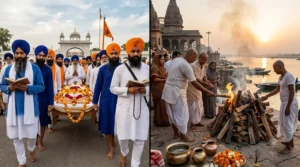
A Sikh funeral looks and feels different from a standard British funeral in almost every respect, from the speed at which it needs to happen to the sacred items that must never be removed from the body. For families navigating this during one of the hardest weeks of their lives, the difference between a generic funeral service and one led by experienced funeral directors in UK who genuinely understand Sikh tradition is enormous. This article explains exactly what that expertise looks like in practice, from handling the Five Ks correctly to coordinating with the Gurdwara, and why choosing a director with real cultural fluency matters as much as choosing one with a good reputation.
What Makes a Sikh Funeral Different From a Standard UK Funeral
Sikh funeral rites, known as Antam Sanskar, are built around a theology that treats death as a natural transition of the soul back to Waheguru rather than an ending to be mourned at length. This shapes almost every practical decision that follows, from a strong preference for cremation over burial, to a general discouragement of long, emotional eulogies, since Sikh teaching holds that the body is simply a vessel and excessive grief can work against acceptance of Waheguru’s will.
A funeral director without specific Sikh experience can easily miss the significance of these details, treating them as optional extras rather than central requirements. An expert Asian funeral director, by contrast, builds the entire process around them from the very first phone call, which changes how quickly things move, how the body is prepared, and how the ceremony itself is structured.
The Five Ks and Why They Must Never Be Removed
One of the most important responsibilities an experienced funeral director carries in a Sikh funeral is protecting the Five Ks, the physical articles of faith worn by an initiated, or Amritdhari, Sikh throughout their life.
- Kesh refers to uncut hair, which must never be trimmed, shaved or altered at any point during preparation of the body.
- Kara is the steel bracelet worn on the wrist, which stays in place rather than being removed for any reason.
- Kanga is the small wooden comb kept in the hair, left untouched throughout the entire process.
- Kachera refers to the specific cotton undergarment, which remains on the body rather than being replaced with standard mortuary clothing.
- Kirpan is the ceremonial small sword, kept with the body out of respect for its spiritual significance rather than treated as jewellery.
A funeral director unfamiliar with these requirements risks causing real distress to a grieving family simply through standard mortuary procedure, such as routinely trimming hair or removing items before viewing. An expert director briefs mortuary staff clearly in advance and treats the Five Ks as non negotiable from the outset, not as something to be worked around.
Speed, Sensitivity and the UK Legal Timeline
Sikh tradition ideally calls for cremation within three days of death, reflecting the belief that the soul should be released without unnecessary delay. In the UK, this timeline runs directly into the realities of medical examiner scrutiny, death registration and crematorium scheduling, which typically extend the process closer to a week rather than three days.
An experienced funeral director manages this tension honestly rather than making promises that cannot be kept, explaining clearly to the family what is legally possible while working every available angle to move things along as quickly as the system allows. This often means liaising directly with the medical examiner’s office, prioritising paperwork, and securing a crematorium slot as early as one becomes available, all while keeping the family informed rather than leaving them to chase updates during an already stressful week.
Coordinating With the Gurdwara and the Akhand Path or Sehaj Path
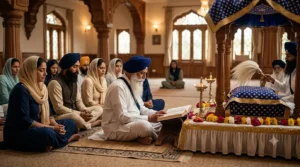
Before the cremation itself, most Sikh families arrange a continuous or extended reading of the Guru Granth Sahib, either the forty eight hour Akhand Path or the more gradual Sehaj Path, usually held at the family home or the Gurdwara. An expert Asian funeral director understands how this reading fits around the funeral timeline and works closely with the family’s Granthi to make sure the cremation, the reading, and the eventual Bhog ceremony are all sequenced correctly, rather than treating each element as a separate, disconnected booking.
This coordination extends to practical details many families would not think to ask about, such as confirming whether the Gurdwara has capacity on a particular date, checking travel time between the crematorium and the place of worship, and making sure the Ardas prayers at each stage are led by the right person at the right moment.
Embalming, Body Preparation and Family Involvement
Sikh custom generally discourages embalming unless it is genuinely necessary, and an experienced funeral director will always seek explicit family consent before considering it rather than applying standard mortuary practice by default. Washing and dressing the body is traditionally carried out by family members rather than funeral home staff wherever possible, and a director familiar with Sikh custom actively facilitates this rather than quietly taking the task over.
This means creating space, both physically and procedurally, for relatives to take part in preparing their loved one, guiding them through the process respectfully rather than treating family involvement as an inconvenience to be managed around.
Language, Communication and Cultural Fluency
Practical communication matters just as much as ritual knowledge, particularly for older relatives who may be more comfortable discussing sensitive arrangements in Punjabi than in English. Funeral directors with genuine experience in the Sikh community often have Punjabi speaking staff available, along with an understanding of regional variations in custom between families with roots in different parts of Punjab or the wider diaspora.
- Punjabi speaking staff help older relatives discuss sensitive decisions without the added strain of a language barrier.
- Awareness of regional and family variation prevents assumptions about a single correct way to conduct every part of the service.
- Familiarity with appropriate dress, colour and etiquette helps avoid small missteps that can feel jarring during an already difficult time.
This kind of fluency cannot be learned from a checklist alone, and it is usually the clearest sign of a funeral director who has spent real time working within Sikh communities rather than simply reading about them.
Managing the Practical Logistics: Cremation, Ashes and Bhog
Beyond the ceremony itself, an experienced funeral director handles a long list of logistical details that families rarely see but would struggle enormously without. This includes timing the cremation appropriately, arranging collection of the ashes once they are ready, and advising on scattering options, whether that means a river in the UK or, for some families, transporting ashes to be scattered at a significant site in Punjab.
The funeral director’s role does not end at the crematorium door either, since many families need guidance on how the Bhog ceremony fits into the days that follow, how Langar is arranged, and how the wider ten day mourning period is typically structured. A director well versed in these customs can answer these questions confidently rather than leaving a grieving family to piece the process together from scattered advice.
Supporting Interfaith and Mixed Families
Not every Sikh funeral involves a family that is entirely Sikh, and an experienced director needs to navigate this with tact rather than rigid assumptions. Where a spouse, child or close relative comes from a different faith or no faith at all, a skilled funeral director helps blend elements respectfully, making sure core Sikh requirements such as the Five Ks and appropriate prayers are honoured while still making space for guests and family members who may be unfamiliar with the customs involved.
Why Experience With Asian Communities Matters Beyond Sikh Funerals
Many of the funeral directors best equipped to support Sikh families also bring experience across Hindu and wider Asian community traditions, since these communities often overlap within the same cities and even the same extended families. This broader base of experience tends to produce a more attentive, less assumption driven approach overall, because a director who has learned to ask rather than assume within one tradition typically carries that same care into every family they serve, including those seeking specialist Sikh Funeral Directors specifically.
Arrange a Sikh Funeral With Genuine Cultural Understanding
Choosing the right funeral director shapes every part of a Sikh funeral, from how the Five Ks are respected to how smoothly the Gurdwara, the crematorium and the Bhog ceremony come together. Gooding Funeral Services has built genuine, longstanding experience as trusted Sikh Funeral Directors, working closely with Gurdwaras and Punjabi speaking families across the UK to deliver a respectful, correctly observed Antam Sanskar. Contact our team today to arrange a dignified, culturally informed funeral for your loved one.
Frequently Asked Questions
- What are the Five Ks and why do they matter in a Sikh funeral?
The Five Ks are the physical articles of Sikh faith, uncut hair, a steel bracelet, a wooden comb, a specific undergarment and a ceremonial small sword, worn by initiated Sikhs and never removed or altered during funeral preparation out of respect for their spiritual significance.
- How quickly does a Sikh funeral need to happen after death?
Sikh tradition ideally calls for cremation within three days of death, though UK legal requirements around medical examiner review, registration and crematorium scheduling typically extend this closer to a week in practice.
- Do funeral directors embalm the body for a Sikh funeral?
Embalming is generally avoided in Sikh tradition unless there is a specific medical or practical reason, and an experienced funeral director will always seek explicit family consent before proceeding rather than embalming as standard practice.
- Can family members wash and dress the body themselves?
Yes, this is traditional in Sikh custom, and an experienced funeral director will actively support and facilitate family involvement in washing and dressing the body wherever the family wishes to take part.
- What is the Bhog ceremony and how does it relate to the funeral?
Bhog marks the conclusion of a full reading of the Guru Granth Sahib and typically follows the cremation within the wider mourning period, closing the structured phase of grief that begins with the Antam Sanskar itself.
- Why does experience with Asian communities matter when choosing a funeral director?
Funeral directors with genuine experience across Asian communities tend to understand regional and family variation, speak relevant languages, and know how to ask rather than assume, which reduces the risk of cultural missteps during an already difficult time.